
“We used to use a ton of salt outside of our city hall,” says Hugo City Administrator Bryan Bear. “It was like an ice skating rink. People were slipping and falling all the time, especially during the spring.” The problem was that the parking lot tilted slightly toward the building, which meant that melting snow ran downhill onto the sidewalks on warm winter days. Overnight, the meltwater would refreeze and encase the pavement in a thick layer of ice, which created a formidable challenge for building staff. Eventually, Hugo regraded and redesigned its parking lot so that meltwater no longer flows onto the sidewalks. “We still have bags of salt by the front door,” Bear says, “But we hardly have to use them anymore.”
Hugo is one of many local cities implementing innovative strategies to reduce its winter salt use. The goal is to maintain public safety, while also protecting lakes, rivers, and streams from permanent water pollution.
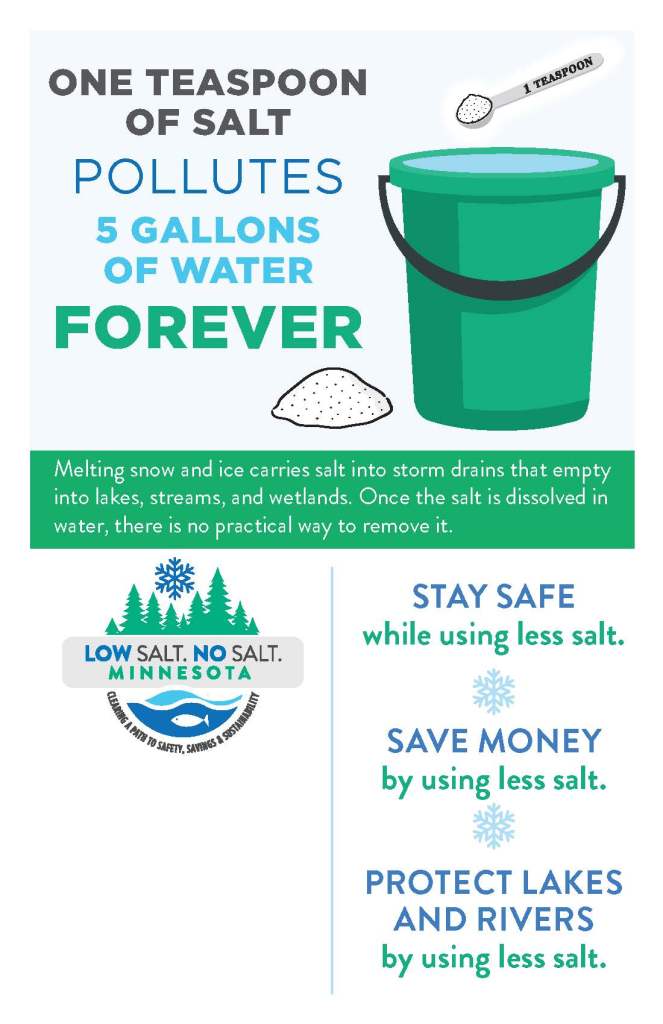
In 2024, the Minnesota Pollution Control Agency (MPCA) added 13 new lakes and streams to its impaired waters list due to too much chloride (salt). With this new addition, there are now 67 water bodies in Minnesota contaminated by chloride (up from only 50 in 2020), an alarming statistic that underscores the need for action. Chloride is toxic to freshwater animals such as fish, aquatic bugs, mussels, and amphibians, and can also disrupt natural processes in aquatic ecosystems. As a result, lakes with chloride impairments will often experience more frequent blue-green algae blooms, and mobilization of radon, mercury, and lead. Unlike phosphorus and sediment, chloride is considered a permanent pollutant because there is no practical way to remove it from surface and groundwater resources once it is there.


Further south in Washington County, the City of Cottage Grove installed heated sidewalks at the entrances to its City Hall, Hero Center, and public works building. “We got 19 inches of snow in 12 hours during one of the big storms two years ago, and the sidewalk was able to keep up the entire time,” says Ryan Burfeind, the city’s Public Works Director. The heated sidewalks are regulated by a pavement temperature sensor that is activated when temperatures drop below zero. As a result, Cottage Grove has completely eliminated the need to use salt in these locations.

In addition to upgrading their buildings and facilities, local cities have also been able to reduce their salt usage by 30-70% after participating in the SMART Salt certification trainings offered by MPCA and Bolten & Menk. These half-day professional trainings teach plow drivers and public works supervisors about low-cost salt-reduction strategies, such as pretreating streets and roads with liquid deicers before storm events, calibrating equipment, and implementing best practices for snow and salt storage.

“We’ve reduced our winter salt use from 1200 pounds per year to 800,” says Shawn Sanders, Public Works Director for the City of Stillwater. In Forest Lake, Dave Adams shares a similar story, “We’ve reduced our winter salt use and are currently only treating intersections.” In addition, several local watershed districts including Ramsey-Washington Metro, South Washington, and Valley Branch have provided cost-share funding to their cities to purchase new technology for their plow trucks, including pavement temperature sensors and GPS-based systems that create precision salting plans for city roads. The watershed districts also collaborated with the City of Oakdale to build a brine mixing facility, which is also helping to reduce the amount of salt applied to roads.

How can you help to protect Minnesota’s lakes and streams from salt pollution this winter? First, try to shovel early and often. If you do require salt, you’ll probably need a lot less than you think. One 12-oz coffee cup full of salt is enough to melt 10 sidewalk squares or a typical 20-ft driveway. Only use sodium chloride if the pavement is warmer than 15°F, and be cautious using “eco-friendly” or “pet-friendly” de-icers, which usually still contain salt.
If you’re looking for a non-salt alternative, chicken grit will not melt ice but can provide traction to prevent slips and falls. You’ll need to sweep it up eventually, but that also means you can reuse it over and over.


